Virtual Conferencing
Conquering lighting, reflections and angles of our computers and making them compatible with our existing glasses.
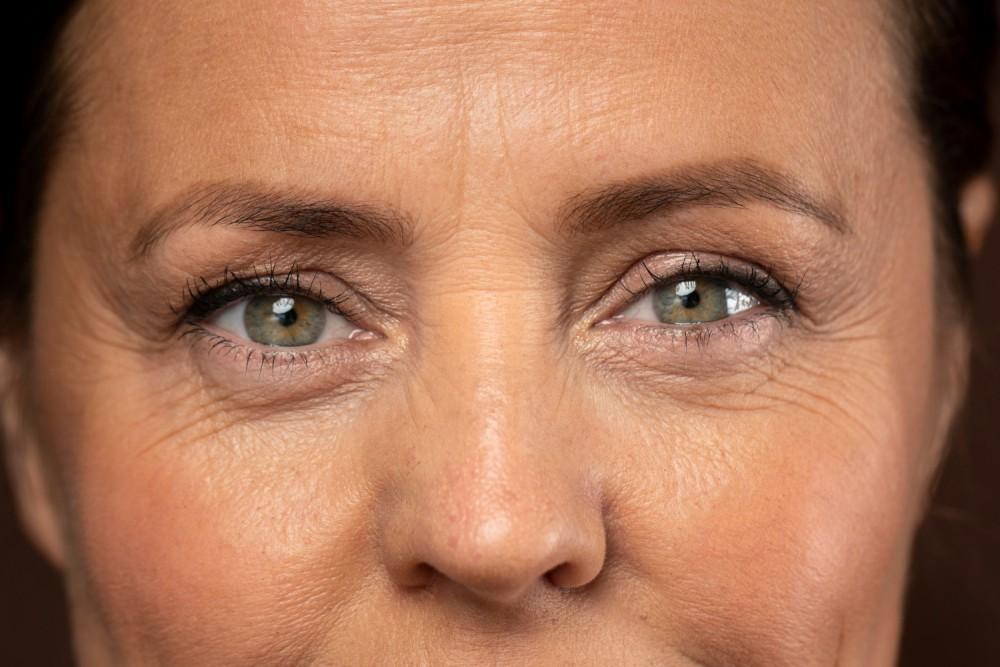
Think of your eyelids as the velvet curtains of your personal cinema. They are marvelous when they draw shut for a restorative intermission, yet decidedly less charming when they refuse to rise all the way for the main feature. When upper eyelids begin to sag, they do not merely lend a perpetually sleepy air to your reflection—they can quietly crop the edges of your world, trimming away the upper and outer corners of your peripheral vision.
At OC Optometry Group, we often meet patients who never realized their side vision had narrowed until a comprehensive exam revealed just how much scenery had slipped behind the curtain. Because the change unfolds gradually, the brain adapts with remarkable diplomacy, compensating in subtle ways long before you notice a shadow overhead.
Though we casually refer to any downward drift as a "drooping eyelid," optometrists generally look for two distinct characters:
Ptosis: Here, the edge of the upper eyelid itself sits lower than it should. This typically happens when the levator muscle—the tiny, tireless pulley responsible for lifting your lid—stretches or weakens over time. Decades of gravity are the most common culprit, though long-term contact lens wear, frequent eye rubbing, prior eye surgery, or certain neurological and muscular conditions can also play a part.
Dermatochalasis: In this case, the eyelid's internal lift works well enough, but excess, lax skin drapes over the lash line like an overly generous valance. Even if the lid margin stays in place, that fold of skin can cast a very real canopy across your upper visual field.
Occasionally, both appear together—a double act that can make bright afternoons feel oddly dim.
Because drooping eyelids rarely arrive overnight, the earliest hints tend to masquerade as harmless quirks. You might find yourself tilting your chin upward to read overhead street signs, unconsciously adopting the posture of an aristocrat surveying a ballroom. You may notice a dull forehead ache by late afternoon—the quiet protest of your brow muscles working overtime to hoist your lids out of the way.
More importantly, a reduced upper and outer visual field affects everyday safety and comfort. Merging into coastal traffic, spotting a cyclist approaching from the side, navigating uneven steps, or enjoying a novel without cranking up every lamp in the room all rely on unobstructed peripheral sight.
A thorough eye exam does far more than update your glasses prescription; it ensures your eyelids and eyes are working in graceful harmony. During an evaluation at OC Optometry Group, we assess eyelid height, muscle function, and overall ocular health to rule out underlying medical causes—particularly if a droop appeared suddenly or affects only one eye.
When peripheral vision is in question, we can perform specialized visual field testing, comparing your sight with your eyelids in their natural resting position versus gently elevated. The contrast is often illuminating, showing precisely how much of your visual horizon is being obscured.
Restoring a wider view is never a one-size-fits-all affair. Depending on the root cause, solutions may include managing ocular surface irritation or dry eye that makes lids feel fatigued, exploring prescription eye drops designed to temporarily lift certain types of acquired ptosis, or coordinating with a trusted oculoplastic specialist when functional eyelid surgery is the most effective way to raise the curtain for good.
Life in Orange County—from sunlit coastal drives to bustling afternoon errands—deserves to be experienced in full widescreen, not through a narrowed frame. If your eyelids have started photobombing your peripheral vision, let our team take a closer look and help you see every detail clearly again.
Contact our office in Irvine or Newport Beach at (949)-854-7122 or (949) 476-2870 to book an appointment.